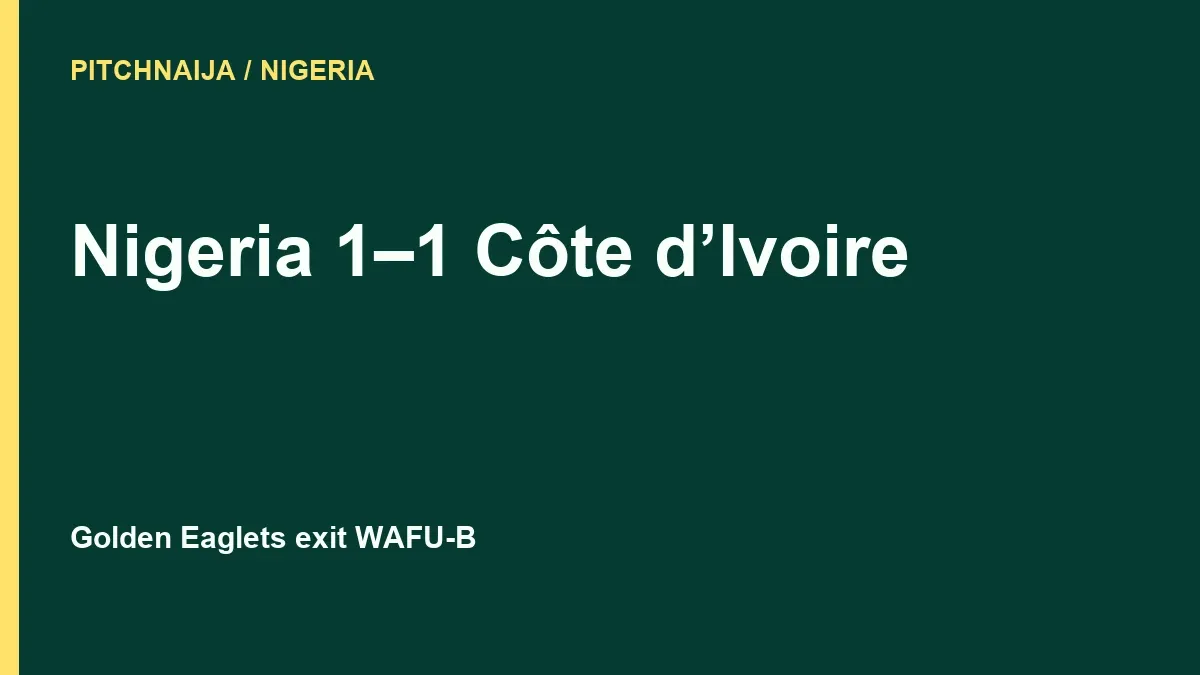
Abiodun John’s late equaliser earned Nigeria a 1–1 draw against Côte d’Ivoire, but it could not prevent the Golden Eaglets leaving the WAFU-B U17 Championship at the group stage. The NFF confirms that the draw followed their earlier 2–1 defeat to Niger Republic.
The federation’s result statement says the Eaglets ‘departed the WAFU-B U17 Championship at group stage’. That is the consequence of the completed group campaign, not a prediction about what the players might become. A late response on the day and an unsuccessful tournament can both be true.
The useful analysis begins by keeping those two ideas separate. An equaliser shows that a team can continue competing while behind. It does not erase the cost of conceding first or replace the win required by the table. The score at the final whistle is only one part of the wider group-stage picture.
For development, the next questions should be specific enough to answer through coaching. How did Nigeria react when an attack broke down? Were passing options available under pressure? Could the team create useful chances without becoming stretched? Those questions are more constructive than declaring an entire age group a success or failure after two results.
That approach also protects the distinction between accountability and abuse. Players and coaches can be asked to examine decisions, preparation and execution without supporters turning a youth tournament into a permanent label. The purpose of reviewing a setback is to identify work that can improve the next performance, not simply to find a name to blame.
Nigeria’s tournament is over, but the players’ development continues beyond the final whistle. Turning the experience into practical work will matter more than finding one sweeping explanation for the exit. Which part of youth-team development would you most want explained after this exit: coaching continuity, preparation or the transition into senior football?