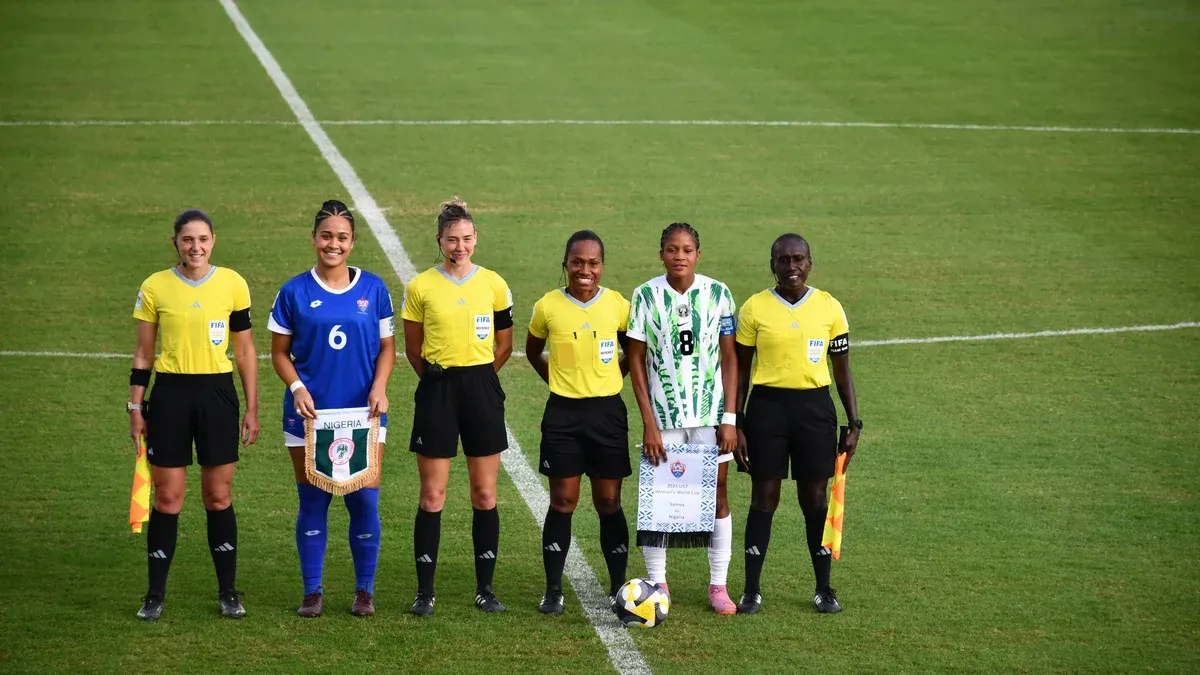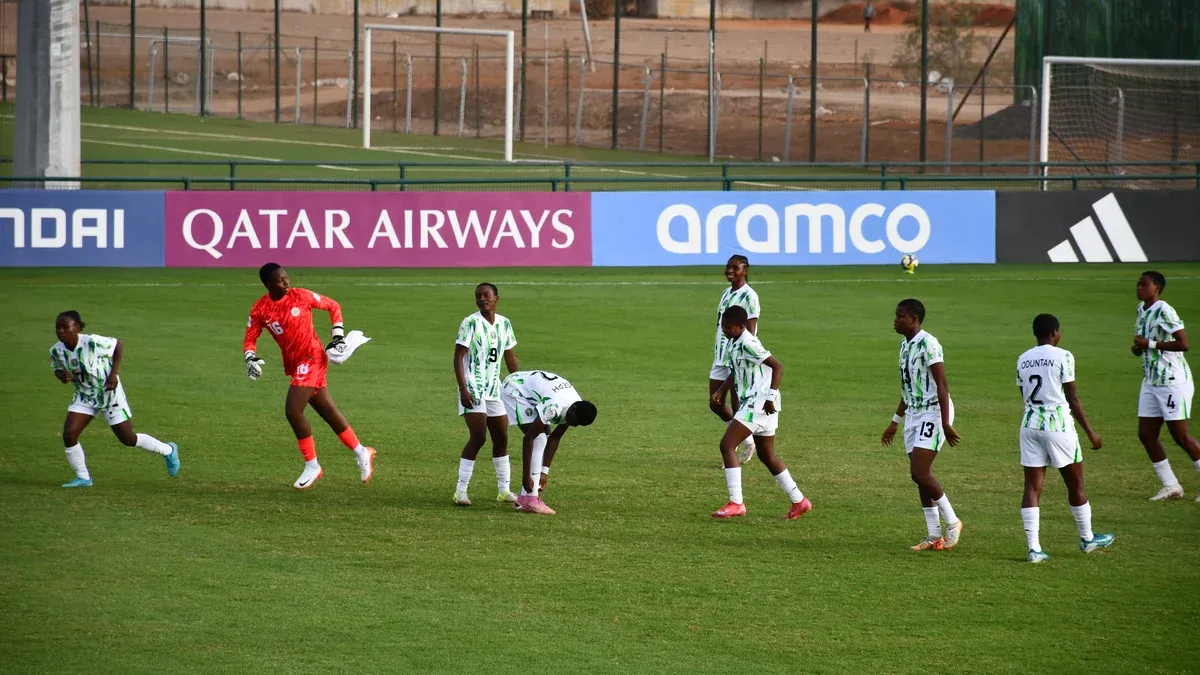
Nigeria’s Under-17 world champions returned to Abuja on Monday, and NFF acting general secretary Emmanuel Ikpeme told the Flamingos that he wants their progress to continue through the Falconets to the Super Falcons. It was a statement of intent about the next stages of their careers, not a promise of immediate promotion.
“As a federation, we want to see that you progress from the U-17 level to the U-20 and then the Super Falcons,” Ikpeme told the squad, as reported by Naija Times. He addressed the players at their Abuja hotel. Galaxy Television separately reported their arrival in the capital after the final in Morocco.
The Flamingos beat Japan 2–1 in Rabat, the first African side to lift the FIFA U-17 Women’s World Cup. But the issue now is different from the one they faced in the final. A tournament can give a young player the confidence to try something under pressure. It cannot give her the weekly minutes she needs to turn that instinct into a habit.
That is where the clubs and national teams have different jobs. Club football provides regular matches, coaching and competition for places. The Falconets can test the players who are ready against older international opponents. Senior selection should depend on how those players develop, not simply on who came home with a medal.
There is also room for players to progress at different speeds. Some may be ready for an Under-20 camp soon; others may benefit more from a steady run of matches where they already play. The useful measure will be how many are still playing and improving when the next age-group cycle comes round. What should the federation prioritise first: regular club minutes, more youth camps or a clearer path into the Falconets?