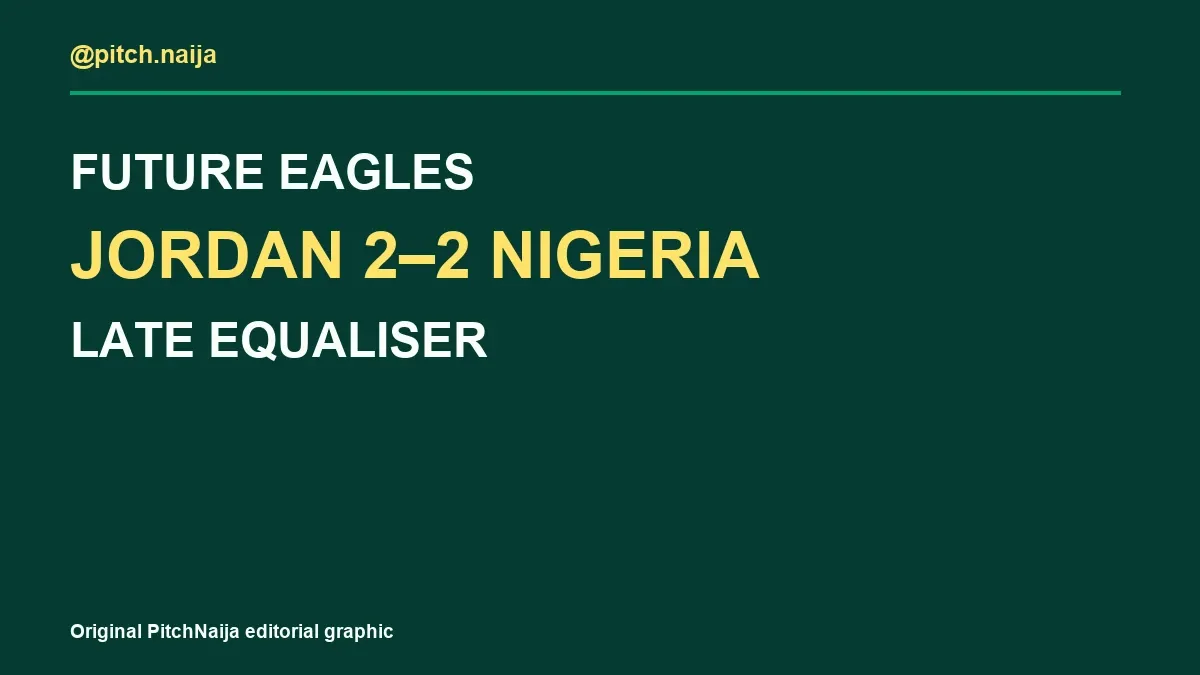
Abdulrazak Muftau earned Nigeria’s Future Eagles a 2–2 draw against Jordan on Sunday at the FIFA U15 World Cup and Festival in Baku. His late goal followed Saturday’s 3–3 draw with South Sudan, leaving the youngsters with two draws from their opening matches.
The Nigeria Football Federation said Muftau equalised ‘with the last kick of the match’. Captain Timothy Ogar had put Nigeria ahead after a goalless first period. Jordan responded, then took the lead before Muftau’s intervention prevented defeat.
Patrick Bassey’s team have scored five goals and conceded five across those games. Saturday’s meeting also changed direction repeatedly: Nigeria recovered from behind, moved ahead and then conceded a late equaliser. Against Jordan, it was Nigeria who found the final response.
The festival uses eight players per side and two 20-minute halves. Group performances determine the tier each team enters for the next stage on 28 and 29 October, before the tier finals on 30 October.
For Nigerian supporters, these results offer two separate talking points: the ability to keep responding after setbacks and the challenge of protecting an advantage. Neither should become a sweeping verdict on individual teenagers. A development competition is most useful when performances are discussed with room for mistakes and improvement.
Scorelines alone cannot explain whether a team’s difficulties came from positioning, possession losses or individual decisions. Those questions need match evidence, not assumptions drawn from the number of goals. The constructive focus is what the players learn together and how they apply it in their next appearance.
Which matters most to you when following the Future Eagles: attacking combinations, defending a lead or responding after falling behind?