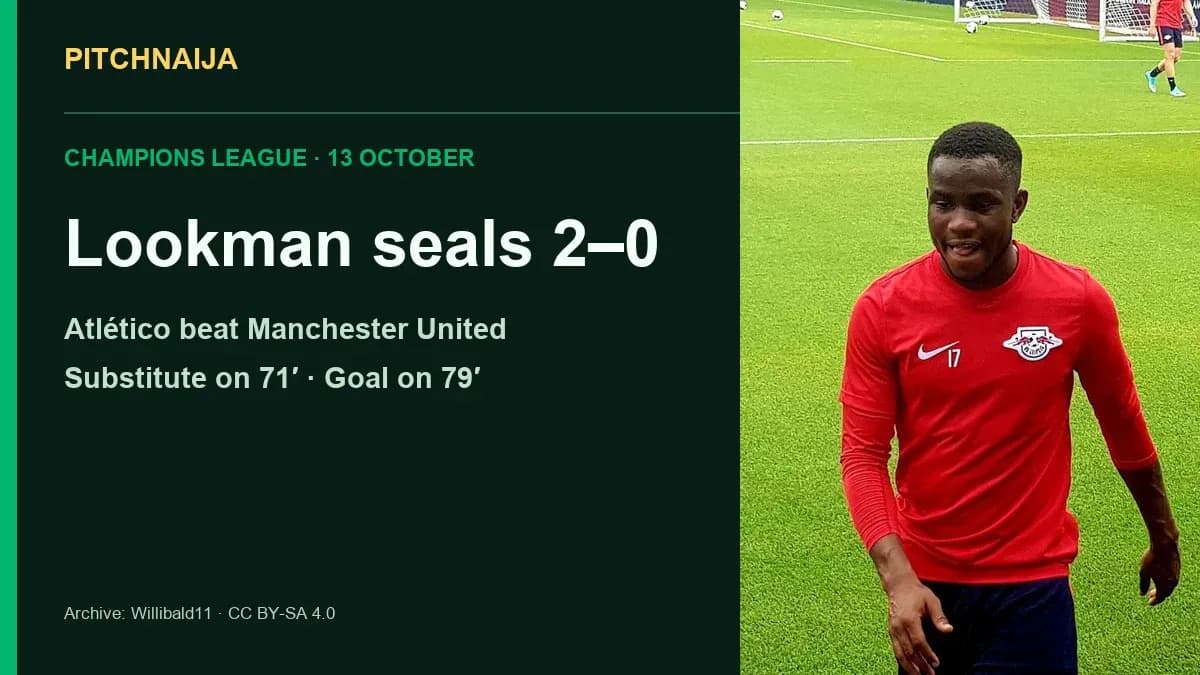
Ademola Lookman came off the bench to score Atlético de Madrid’s second goal in their 2–0 Champions League victory over Manchester United on 13 October. For Nigerian supporters following his club role, the decisive detail is that a substitute appearance still produced a direct contribution to the result.
Atlético’s official match record lists Pablo Barrios as the opening scorer and Lookman as the scorer in the 79th minute. The club’s running account records Lookman entering in the 71st minute, with Atlético already ahead. His goal therefore extended a lead rather than opening the scoring or overturning a deficit.
In the headline accompanying his official club interview, Lookman said, translated from Spanish, ‘It has been a great match from the whole team’. That collective assessment is worth keeping alongside his individual contribution. The result belonged to Atlético, even when the Nigerian angle naturally draws attention to his finish.
A single match cannot establish a permanent hierarchy among the forwards. Starting a game and influencing its ending are different measures of involvement. Lookman’s contribution is evidence of what he achieved in this appearance, not proof that every future selection decision has already been settled.
For fans assessing Nigerians abroad, minutes and role provide useful context around a goal. An early starter works through a different match situation from a player introduced against tiring opponents or a changed defensive shape. Neither role automatically makes a contribution more valuable; the match circumstances explain its importance.
Here, the concrete outcome is straightforward: Atlético won, Lookman added the second goal and his team kept United from scoring. The next assessment should remain just as specific, following his actual involvement rather than assuming a guaranteed starting place. How should Nigerian fans weigh a decisive substitute goal against a longer appearance without one?